 Anito Connect
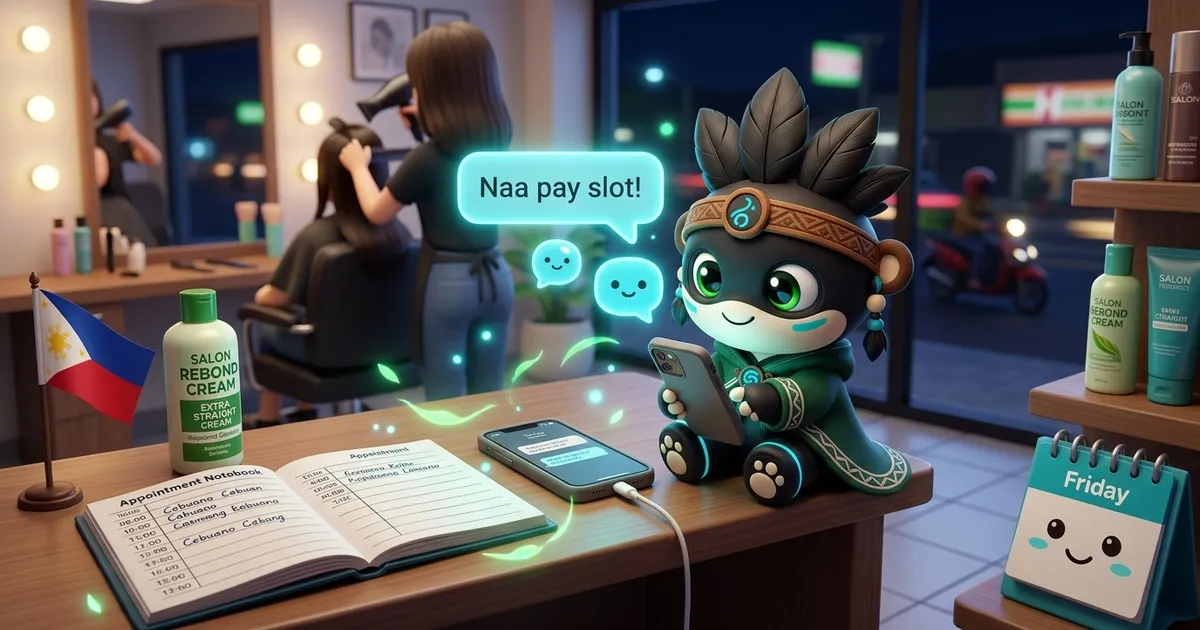
7:45 PM, Friday. A hair salon in Cagayan de Oro has two stylists in the middle of rebond and a phone buzzing inside the drawer.
A message comes in: "Naa pay slot ugma para rebond? Sweldo man gud."
Twenty minutes later, the owner's cousin, who helps with the page, replies: "Good evening ma'am. Kindly provide your preferred date and time." By then the customer has booked another salon. That one answered in under a minute: "Naa pa, ma'am! Unsa'y oras imong gusto?"
Same price. Same quality, maybe. The difference was how the reply sounded.
Why does the language of your reply matter on payday weekends?
Because a customer who feels understood books right away, and one who feels like she is talking to a form moves on. Paydays bring lots of messages in a short window, and people ask the way they talk.
Next Friday, October 30, is an end-of-month payday for many workers. Expect "may slot pa ba?", "naa pay stock?", "pila ang delivery?" to land all evening, while you are busy serving the people already in front of you.
A stiff English reply is not wrong. It just feels far away, especially to a customer who wrote in Bisaya.
What does a reply in the customer's own language look like?
It matches the customer's words, tone and level of formality, then asks one clear question to move the booking forward.
A few examples:
- Customer: "Naa pay slot ugma?" Reply: "Naa pa, ma'am! Rebond ba o haircut? Unsa'y oras ang gusto nimo?"
- Customer: "Magkano po ang rebond?" Reply: "Hello po! Depende po sa haba ng buhok. Pwede po bang magpadala ng photo para ma-quote namin agad?"
- Customer: "Do you deliver to Talamban?" Reply: "Yes po, we deliver there. May I have your full address and preferred time?"
Notice what is missing: "Kindly be advised," "Rest assured," and long greetings. Short, warm, and one question at a time.
Can Facebook Messenger automation handle Bisaya, Tagalog and Taglish?
Yes, if the tool is built for how Filipinos actually write. Anito Connect is Facebook Messenger automation for Filipino SMEs that replies in Tagalog, Bisaya/Cebuano, Taglish or English, depending on what the customer used.
It can take the booking, answer price, hours and location questions, handle a Cash on Delivery order, check a payment proof and open a support ticket. It does this at 7:45 PM on a Friday, or at 1 AM on a Sunday, while your team is busy or asleep.
It will not replace you. Anything unusual, like a special request or an upset customer, can go to you with the whole conversation attached.
What should I set up before the 30th?
Start with the questions you already answer every week. You do not need a perfect system, just a clear one.
- Write down your five most-asked questions, in the exact words customers use. Include the Bisaya or Tagalog version.
- Put your real prices, hours and location in one place.
- Decide your slot rules: how many bookings per day, and what you need from the customer (name, service, time).
- Decide what needs a human: custom orders, complaints, refunds.
- Read your last 20 messages and notice how many were not in English.
That last step is usually the eye-opener. Most owners find their customers have been speaking one way while the page answered another.
Is it worth doing now instead of after the holidays?
Yes, because the busy weeks are the ones where slow, stiff replies cost the most. Payday weekends are here now, and the Christmas rush is close behind. Whatever you fix this week will already be working by then.
Small shops win on warmth. A customer in Cagayan de Oro, Davao or Cebu City who gets "Naa pa, ma'am!" at the right moment feels like she walked into a place that knows her.
Tonight, before you close, take ten minutes to write down those five questions in your customers' own words. Then see how Anito Connect would answer them on your page.